nav-left cat-right
cat-right

Cardiovascular Exercise Machine: Underused and Und...

When you think cardio equipment for your home gym/home fitness routine, you likely think treadmill, elliptical machine and/or stationary bicycle. While these are all great picks and will allow you to get an effective heart-pumping workout, their are limits. These cardio machines, particularly the highest quality picks, are often expensive, don’t provide a full-body workout, take up a great deal of space and require maintenance that can be a headache. Have you ever considered a home rowing machine? If not, why? Do you see (and use) them at the gym? Rowing machines are under-estimated as an excellent cardio option and considered to be ‘out of style.’ Think twice before you dismiss rowers as an alternative to your treadmill workout. Before you buy: set a budget to narrow the price range.

You should set a budget no lower than $650. Choose an air rower that uses wind-resistance. These machines are more fluid and feel more natural than hydraulic-resistance rowers. Do your research by reading online customer reviews and visiting expert exercise equipment sites. Look for sales and plan to make your purchase in January (when there are huge sales).

Yoga styles

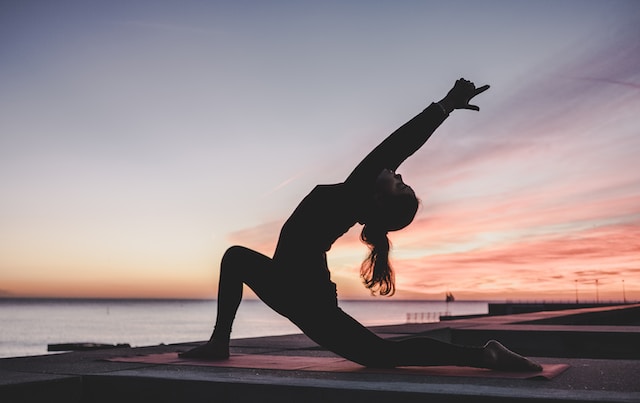
Yoga by definition means “union” and has been around for thousands of years. The mind-body benefits are endless. Practicing yoga regularly promotes flexibility, relaxation, tones muscles and reduces stress, for starters. There are many types or styles of yoga. Here’s a rundown on some of them:

Hatha-  a great yoga style for beginners, hatha yoga encompasses various class styles but tends to be slower-paced and gentler than other forms. It’s an excellent option for individuals that desire to lay a solid foundational understanding of the basic yoga postures.

Vinyasa- like Hatha, this term also encompasses a variety of class styles. It is comprised of a sequence of yoga postures connected with the breath & designed to create flow throughout the practice.

Ashtanga- or ”power yoga” is more a more physically demanding style of yoga practice with an emphasis on muscular endurance as well as flexibility – it offers a rigorous workout.

Bikram- or “hot yoga” includes a sequence of 26 yoga poses performed in a heated room. It is not uncommon for Bikrim classes to last 90-minutes.

Iyengar- the focus of this style of yoga is on proper body alignment and includes the use of props and/or accessories to facilitate the correct body position for each pose. Typically, there is an emphasis on holding the postures for a longer period of time instead of flowing quickly from one pose to the next.

Exercise equipment: picks for your home fitness ro...

    Stability ball (Swiss ball):

While a stability ball is best known for engages multiple muscle groups during abdominal training, that is only the beginning. It offers the same benefits for upper and lower body toning. Adding controlled instability to your workout promotes muscular endurance and challenges your body’s ability to balance itself.

    Resistance tubes:

A lightweight total body shaping aid ideal for the space challenged and/or for those new to exercise. Unlike Therabands, resistance tubes resemble jump ropes and feature triangle-shaped handles on each end for grip comfort and stability. Recommended by the American Council on Exercise (ACE), they vary in length, thickness and color. Usually, thicker, shorter, darker-colored tubes provide more tension.

    Dumbbells:

Equipment that adds includes external resistance in the form of weights, such as dumbbells, is essential for muscle growth or hypertrophy. Ideally, you need several sets of dumbbells as certain exercises require heavier weights while others require a lighter set. Consider opting for adjustable dumbbells as they offer multiple resistance levels while saving space.

Other options for strength training at home include medicine balls, Bosu trainers and kettlebells. Even household items can double as fitness accessories. Remember, your own body weight, working against gravity, provides resistance for many challenging exercises, such as the military-style push-up.

Lower body toner for two

This Valentine’s Day workout side by side with your sweetheart. In addition to getting fit and having fun, exercising together will build muscle while enhancing communication. Squats are a classic lower body toner. There are several versions of the partners’ squats. You can do them back to back, as you would a wall squat/wall sit. Or try partner assisted bodyweight squats:

Stand facing your partner at approximately arm’s length away. With your feet facing forward, slightly greater than shoulder-width apart, grasp your partner’s forearms. Begin to squat toward the floor at the same time; shifting your hips backward and downward. Maintain a firm grasp as you bend at the knees lowering your body until your thighs are parallel or almost parallel to the floor and your torso begins to pull toward your partner. Hold this position for a few seconds. Make sure you don’t extend your knees past your toes. Imagine there is a chair behind you. Return to a standing position by squeezing your buttocks and pushing through your heels. Repeat. To make it more difficult, try one-leg squats.

Pose of the week: V-sit

Can one yoga pose really tone and tighten multiple core muscles…including your rectus abdominis, external and internal obliques, transverse abdominis, spine extensors and erector spinae? You bet. This crunch-free abdominal toner not only enhances core strength but may improve your posture. Start by sitting on a mat on the floor, on your “sit” bones or the bones at the base of your butt. Bend your knees and keep your legs together, feet flat on the floor. With your hands placed behind your thighs, contract your abdominal muscles, keeping your back straight and erect while you lift one leg, then the other, elevating your feet until your calves are parallel to the floor. The advanced position is pictured at left. In this position, your shoulders should be pressed down, away from your ears, arms and legs straight, at a 45-degree angle. Want to take it a step further and tone your upper body at the same time? Try a V-sit incline press.

Home fitness basics: getting started

Developing a home fitness routine may seem daunting, even overwhelming, particularly if you are an exercise novice. In a world where “instant” is the norm, particularly in today’s technology world, it is tempting to skip the planning phase, diving into a potentially inappropriate exercise routine and overspending on exercise equipment. Save money, time, and potentially injury by familiarizing yourself with some fitness basics.
  1. Health check: Before embarking on any moderate to vigorous exercise routine, it is essential to check with your doctor and possibly schedule a physical, particularly if you have an existing medical condition, such as high blood pressure.
  2. Structure: A well-balanced routine includes two main components: cardiovascular activity and strength training. However, stretching post-exercise, while muscles are warm, enhances flexibility and reduces your risk of injury.
  3. Guidelines: If you are not familiar with the exercise recommendations for healthy Americans, this is the place to start. The Centers for Disease Control and Prevention provide age-specific exercise guidelines and lists some of the benefits of exercise based on their 2008 Physical Activity Guidelines for Americans Toolkit.
  4. Assessment: Make goal setting easier by assessing your wants, needs and potential limitations. Determine how much space you have in your home for working out comfortably, outline a budget and make a list of physical activities you currently enjoy or enjoyed as a child.
  5. Goal setting: The information gained from your assessment as well as your fitness goals will help you determine the best picks for your home fitness equipment. Start by setting two to three fitness goals. Ideally, goals should be specific, realistic and measurable. Perhaps you wish to lose weight and/or body fat, tone and strengthen specific muscle groups to improve sports performance or enhance flexibility to ease the pain of tight muscles.

While it is certainly possible to engage in an exercise routine at home without pre-planning, taking the time to plan and self-reflect will help you avoid making costly and potentially dangerous choices. Planning reduces the likelihood that your brand new stationary bike will end up serving as an expensive coat rack.